Fire suppression systems are a critical part of any building’s safety infrastructure — and depending on your occupancy type and local codes, they may be legally required. But not all suppression systems are created equal, and understanding their differences is key to choosing the correct kind and maintaining it properly.
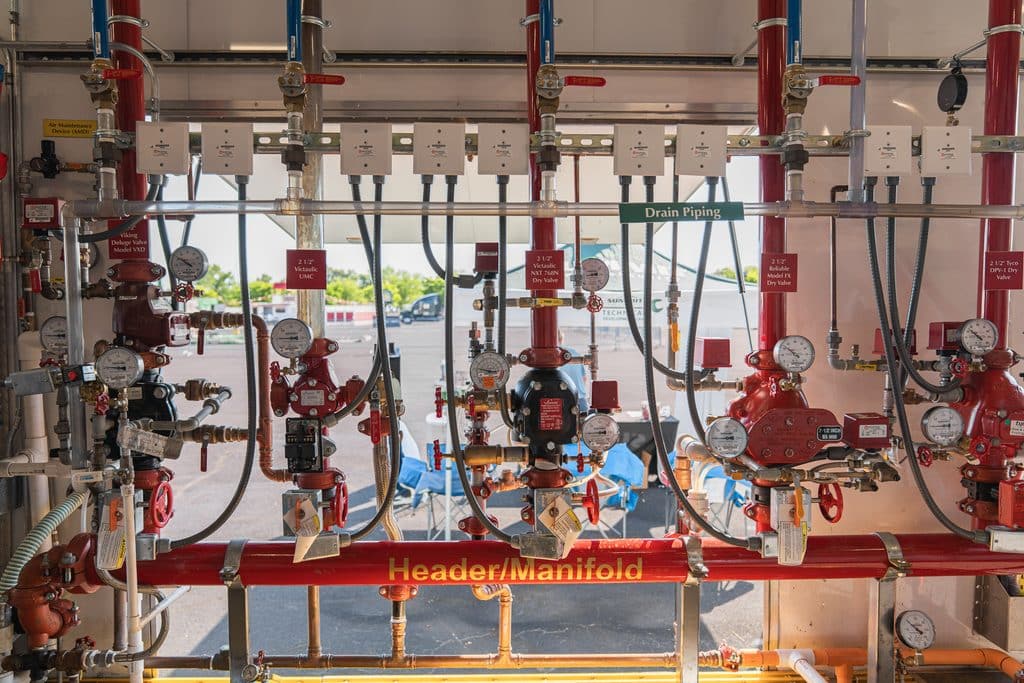
There are four main types of fire suppression systems, each designed for specific conditions:
- Wet pipe systems
- Dry pipe systems
- Pre-action systems
- Deluge systems
Here’s a rundown of how they work and where they belong.
Wet pipe systems
Wet pipe systems are the original — they’ve been around since the 19th century, and there’s a reason they’re still the most common system installed today. They’re simpler, less expensive to install, and easier to maintain than anything else on this list.
The way they work is straightforward: the pipes are always filled with pressurized water. When a fire breaks out, heat melts a glass bulb on the nearest sprinkler head, and water immediately begins discharging from that head. No delay, no waiting — the water is already right there. That makes wet pipe systems the fastest-responding option of the four.
Wet pipe systems are best most commercial and residential buildings where freezing isn’t a concern, including:
- Offices
- Retail stores
- Schools and universities
- Hospitals
- Hotels and apartment buildings
- Heated warehouses.
Dry pipe systems
The tradeoff is cost and complexity. Pre-action systems are only justified where a false activation would be genuinely devastating, including:
- Museums
- Libraries
- Archival storage facilities
- Data centers
Deluge systems
The three systems above cover the vast majority of buildings. But in high-hazard environments with highly flammable substances, volatile chemicals, or extreme fire risk, a more aggressive approach is needed. That’s where deluge systems come in.
Deluge systems are essentially the opposite of pre-action systems. Instead of adding extra steps to prevent water discharge, they’re designed to flood an entire area with water as fast as possible. All of the sprinkler heads are open at all times — there are no heat-activated elements in them to trigger. The pipes are dry until a detection system triggers a deluge valve, which floods every head simultaneously. The result is a massive volume of water delivered across the entire protected area all at once.
These systems are more complex and expensive than wet or dry pipe systems, and the potential for water damage is significant. Deluge systems are typically used in settings where the risk of a rapidly spreading fire far outweighs the cost of water damage, including:
- Aircraft hangars
- Flammable liquid storage facilities
- Chemical processing plants
- Other high-hazard industrial settings
Choosing the right system and keeping it working
To sum up what we’ve learned so far, there are four types of fire suppression systems, each with its own use case:
- Wet pipe systems: simple, fast, and cost-effective; ideal for most environments
- Dry pipe systems: extend fire protection to spaces subject to freezing
- Pre-action systems: prevent accidental discharge in water-sensitive settings
- Deluge systems: provide maximum suppression power in extreme fire-risk areas
Knowing which system fits your building is step one. But no suppression system does its job if it’s improperly installed or poorly maintained. These systems need to be designed and installed by qualified professionals, and they require regular inspection and maintenance to stay code-compliant and ready to perform when it matters.
That’s where Summit Fire National Accounts comes in. Whether you’re trying to figure out which system is right for a new facility, need an existing system inspected, or are looking for a reliable partner for ongoing maintenance across multiple locations, we’re here to help — from initial selection through every inspection down the line. Reach out to our team and let’s make sure your fire suppression system is doing what it’s supposed to do.