
You may not associate winter with structural fires, but for large commercial and industrial facilities, the season can be one of the most dangerous times of year. Increased heating loads, temporary heating equipment, and electrical strain all raise fire risk — while cold temperatures quietly threaten the very systems designed to control a fire once it starts.
Understanding what vulnerabilities exist in cold-weather fire suppression systems is key to ensuring they’re ready when you need them. In this article, we’ll look at different types of systems, how cold weather affects them, and what property owners and managers should be doing to stay protected and compliant.
Why large facilities are particularly vulnerable
Large facilities—like warehouses, manufacturing plants, distribution centers, and aircraft hangars—present unique challenges when temperatures drop. That’s because these buildings often have a combination of:
- Large unheated spaces
- Long pipe runs
The combination of large unheated areas with long pipe runs means traditional wet systems can’t be used. In areas where temperatures can fall below freezing, you can’t safely have water sitting in sprinkler piping. If it freezes, it expands, which can split pipes, crack fittings, and damage valves. Not only would frozen pipes render your fire suppression system useless in a fire, but they themselves could cause damage from flooding.
Fortunately, there are two major types of systems designed for cold-weather fire suppression: dry systems and antifreeze loops. When properly set up and maintained, they can keep your facilities safe through the coldest of winters. Let’s take a look at each.
Dry systems
Dry systems solve the problem of water freezing in pipes by filling them with pressurized air or nitrogen. That air holds back the water at a special valve called a dry pipe valve. When a sprinkler is triggered during a fire, the air pressure drops, the valve opens, and water flows into the piping and out through the activated sprinklers.

This design keeps water out of vulnerable piping, solving one problem, but it’s more complex than a traditional wet system and is not immune to the effects of cold weather. Here are some of the issues that you need to consider:
- Air compressor issues – Dry systems rely on a compressor to maintain pressure in the system. If it fails, pressure drops, and the system can flood with water, which will then freeze in the pipes.
- Condensation in piping – Traditionally, dry systems use compressed air. If that air contains moisture, it can condensate and accumulate inside the system. In freezing conditions, that moisture can turn to ice at low points, creating internal blockages.
- Frozen valve components – The dry pipe valve and associated trim must be kept in a heated environment. If the valve room drops below recommended temperatures, critical parts can freeze and malfunction.
Regular inspections for dry systems
Any of the above issues has the potential to render your dry system inoperable, which is why it’s important that the system is inspected regularly for problems. Local regulations and insurance requirements vary, but most are based on NFPA 25 guidelines, which require regular inspection and testing of dry systems year-round.
These inspections include ensuring:
- Proper system air pressure
- The compressor is operating normally and not short-cycling
- No excessive moisture in air lines
- Drum drips, drains, and low points are free of ice buildup
- Valve rooms are heated and maintained at or above recommended temperatures (typically 40°F or higher)
While some basic visual checks can be done by trained facility staff, formal inspections, testing, and maintenance of dry pipe valves and air supply equipment should be performed by qualified fire protection professionals, like the experts at Summit Fire National Accounts.
Antifreeze loops
Another approach for protecting fire suppression systems in cold areas is the use of antifreeze sprinkler systems, often called antifreeze loops. Instead of air, these systems contain a water-based solution mixed with antifreeze to prevent freezing.
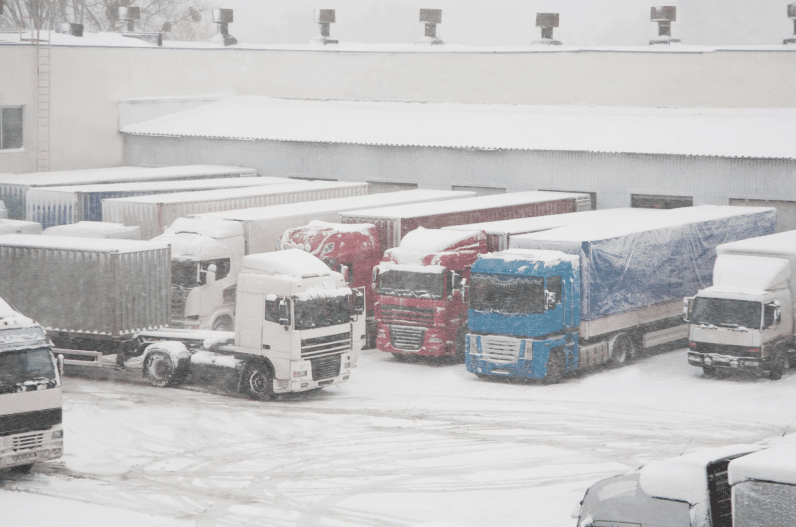
They are most commonly used in small, localized spaces such as loading docks, exterior entry canopies, unheated vestibules, and small additions where installing a full dry system would be impractical.
Antifreeze loops offer some clear operational benefits, including faster water delivery, simpler infrastructure, and less equipment to maintain. But, while there are fewer things that can go wrong with an antifreeze loop, they’re still not foolproof: antifreeze only works if the concentration is correct.
Over time, the mixture in the system can change due to:
- Dilution from leaks or system work
- Improper refilling after maintenance
- Stratification, where the solution separates into layers of different concentrations
If the concentration becomes too weak, the solution can freeze — leading to burst piping, damaged sprinklers, and major water damage when temperatures rise. On the other hand, if there is too much antifreeze in the mixture, it runs the risk of becoming too viscous and slowing down delivery in the event of a fire.
Regular inspections for antifreeze loops
Because of these risks, NFPA 25 requires annual testing of antifreeze solutions. Samples must be taken and analyzed to confirm that the freeze point and concentration are within approved limits.
NFPA 25 also requires you to:
- Test the check valve to ensure antifreeze isn’t leaking into the main water supply.
- Test the main drain to ensure appropriate water pressure is available
- Ensure the correct antifreeze solution is being used, one that is listed for that purpose and approved by local authorities.
Again, requirements differ by locality, including whether these inspections need to be done by qualified personnel or by a certified professional.
Staying protected and compliant
Modern fire suppression systems are designed to work in extremely cold climates, but they only perform as intended when they are properly inspected and maintained.
For dry systems, winter readiness means consistent inspection of air pressure, compressors, moisture removal, valve room heating, and drainage of low points. Monthly visual checks combined with scheduled professional inspection, testing, and maintenance are essential year-round, but in winter become even more critical. A compressor failure in July is a maintenance issue. The same failure in January can leave you with a frozen, inoperable sprinkler system.
For antifreeze loops, it means ensuring the solution is properly maintained and periodically lab-tested, along with routine inspection of valves, piping, and protected areas.
Keeping large, complex facilities protected through the winter requires planning, documentation, and experienced support. A qualified fire protection partner like Summit Fire National Accounts can help ensure your systems remain reliable, compliant, and ready to respond — no matter how low the temperature drops.